When ornament was power
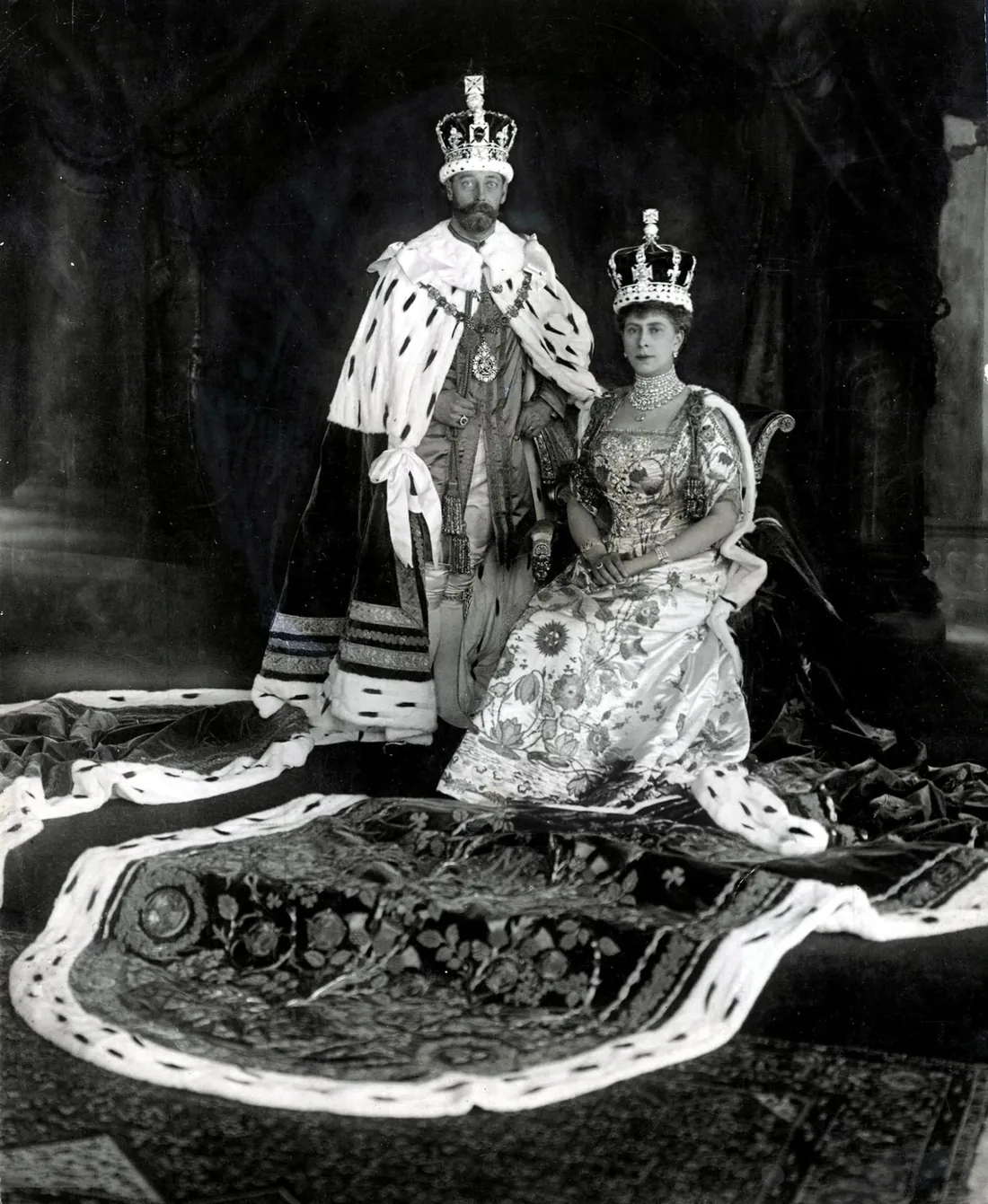
In the age of empire, embroidery spoke before anyone did. Dense gold borders announced rank across a hall; up close, they rewarded the eye with endless detail. The portrait of King George V and Queen Mary, kept with the family archive, opens a window onto that ceremonial world.
The family's own history connects earlier generations of Shams Uddin's line with ceremonial embroidery for King George V and the British royal household. The portrait appears here as the setting for that family account.
Skill can be inherited. Vision cannot.
From robe to picture
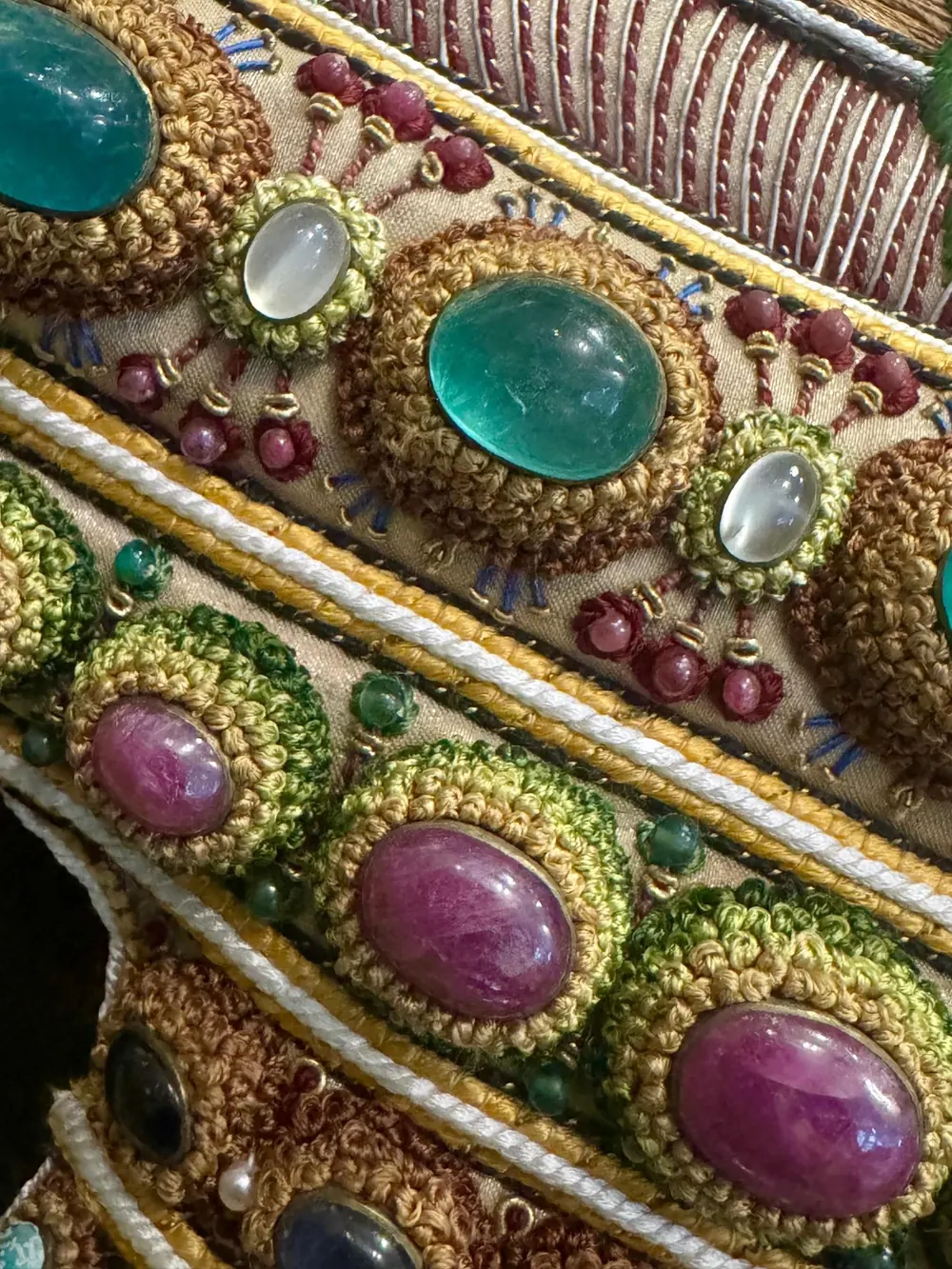
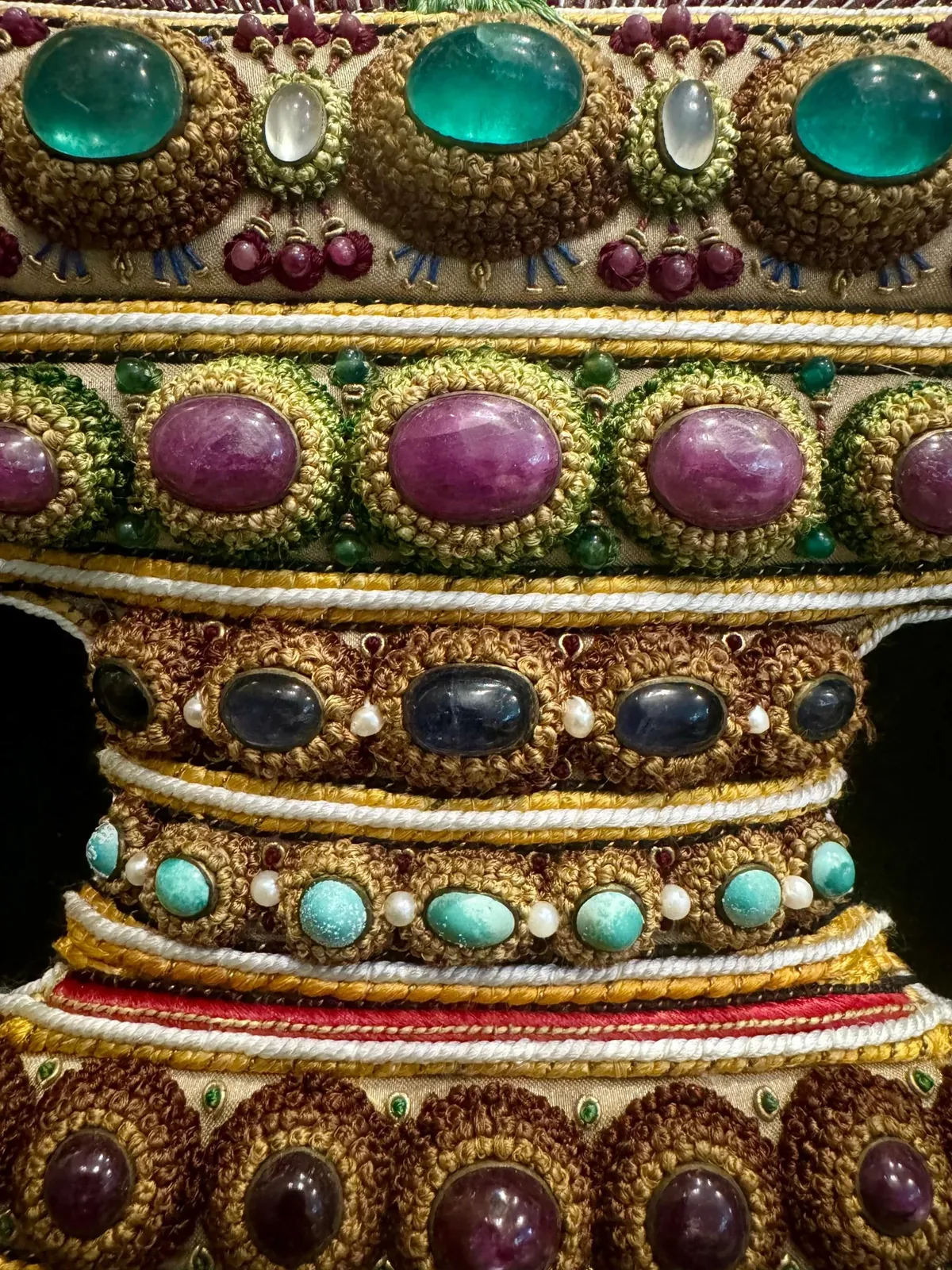
Shams Uddin took the vocabulary of courtly richness and turned it towards a garden. In The Vase, abundance becomes bloom; the jewelled weight of royal dress becomes a vessel, tier upon tier of stones beneath the flowers.
The grammar of zardozi
The Victoria and Albert Museum describes zardozi as embroidery using metallic wrapped threads and embellishments, including small coils secured to the fabric. In The Vase, that richer vocabulary sits beside coloured silk raised into relief: the flowers carry a soft sheen that follows each stitch, the vessel a denser rhythm of borders and stone.
Zardozi, sometimes written zardosi or zar dozi, takes its name from the Persian for gold embroidery, zar and dozi. Its threads, zari, once made robes glitter like jewellery; in The Vase the jewels are real, precious stones set into silk.
Indian embroidery at the V&A ↗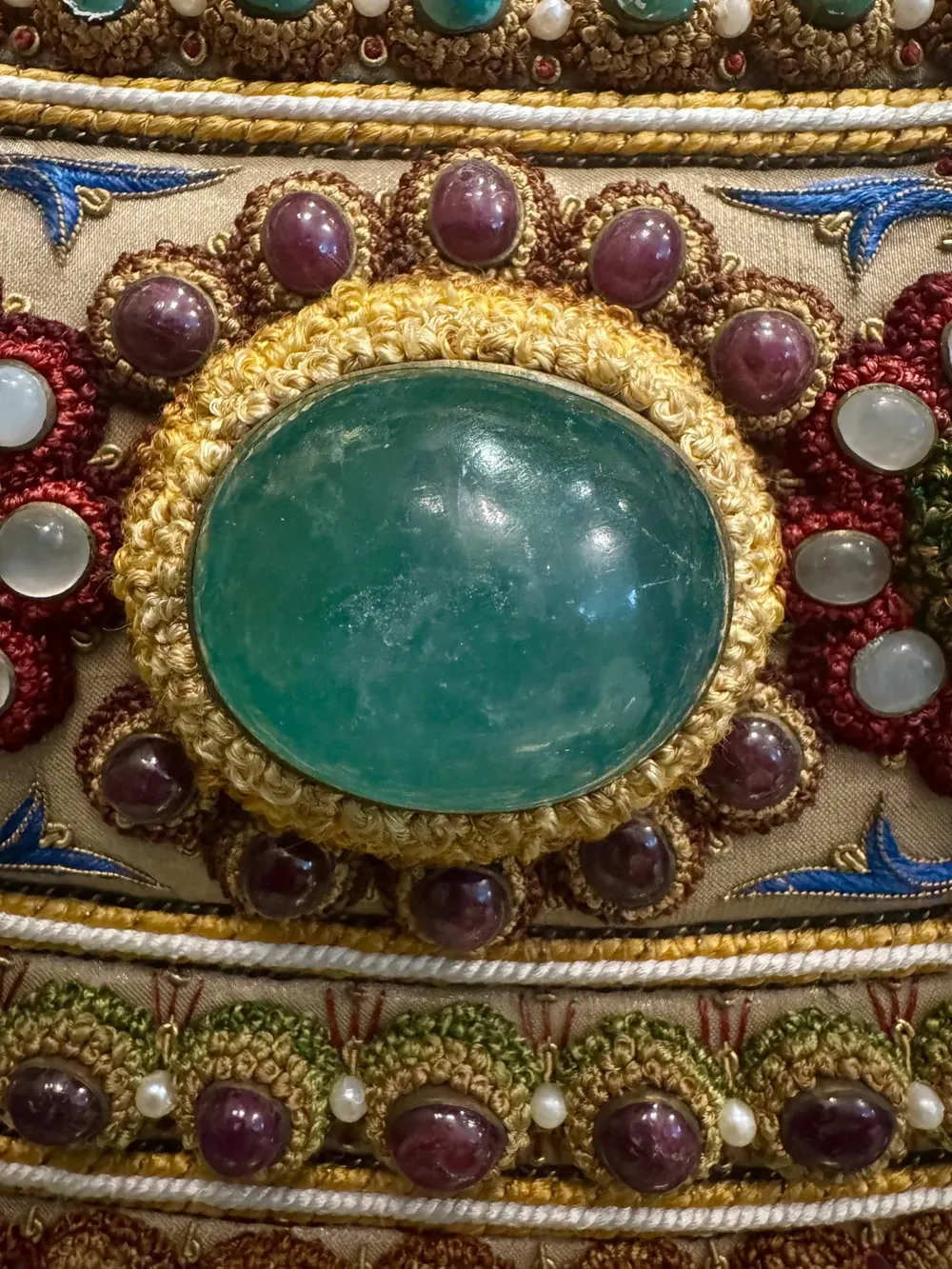
A history carried forward
Decades lie between the royal portrait and The Vase. Yet they belong to one family story: splendour remembered, and an individual voice that grew out of it and sang in its own key.